BMI vs Body Fat Percentage: When Each One Misleads You
BMI is quick but blind to muscle, while body fat percentage is richer but harder to measure. Here is how each one works and when to trust it.
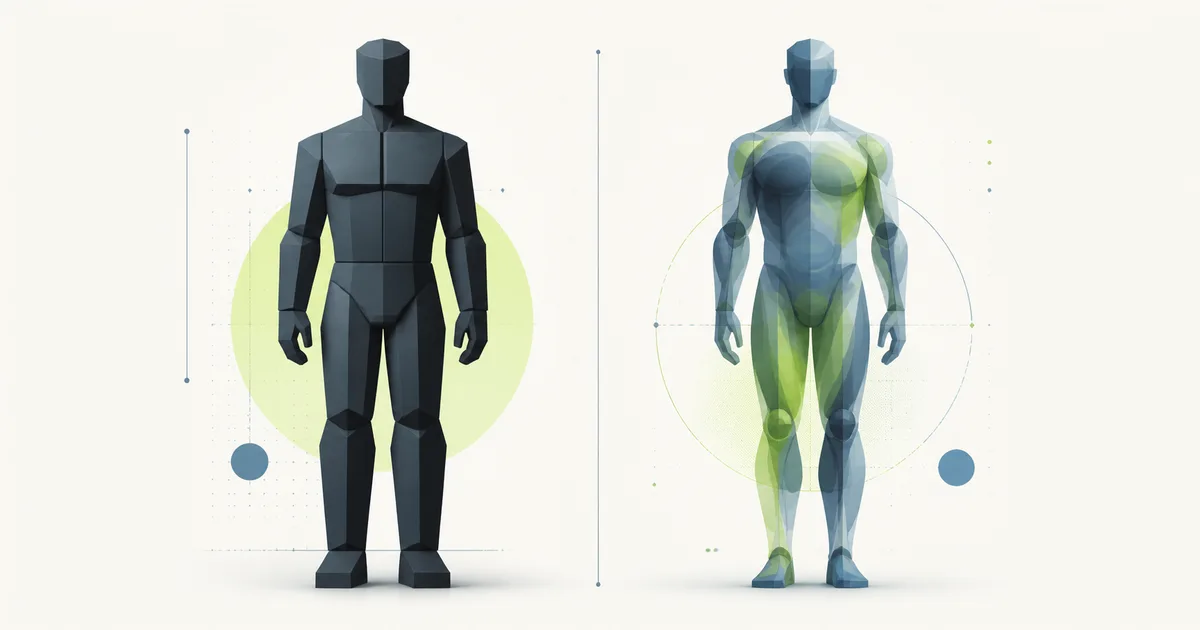
BMI and body fat percentage are often treated as if they measure the same thing, but they answer different questions. BMI asks how heavy you are for your height. Body fat percentage asks how much of your body is actually fat. That difference explains why a fit, muscular person can be labelled overweight by BMI while having a perfectly healthy body fat level. Knowing what each number can and cannot see keeps you from drawing the wrong conclusion.
What BMI can and cannot see
BMI is your weight in kilograms divided by your height in meters squared. It is fast, free, and works reasonably well across large populations, which is why health services use it for screening. Its blind spot is that it only sees total weight. It cannot tell whether that weight is muscle, fat, or bone, so a heavily muscled athlete and a sedentary person of the same weight and height get the same BMI.
- Strong point: quick, cheap, and useful for population screening.
- Blind spot: cannot separate muscle from fat.
- Misleads high for muscular athletes.
- Misleads low for older adults who have lost muscle but kept fat.
What body fat percentage adds
Body fat percentage tells you what share of your weight is fat, which is closer to what most people actually care about. It can distinguish the muscular athlete from the sedentary person that BMI confuses. The catch is measurement. Home scales that use bioelectrical impedance can swing with hydration, skinfold calipers depend on the person taking them, and precise methods like DEXA are not something you do every week. Because methods disagree, the trend over time matters more than any single reading.
- Reflects actual fat mass, not just total weight.
- Separates athletes from sedentary people of the same weight.
- Home methods vary with hydration and technique.
- Track the trend with one method rather than chasing an exact figure.
Which one should you use
For a quick, no equipment check, BMI paired with a waist measurement covers most people well. If you lift weights, are an athlete, or are an older adult concerned about muscle loss, a body fat estimate adds real value. Neither number is a diagnosis. They are signals that work best alongside how you move, your energy, and guidance from a health professional.